


How to Open a Caviar Tin: Step-by-Step Guide (3 Methods)
Quick Answer: To open a caviar tin, insert a caviar key or butter knife between the lid and the base, gently twist to break the vacuum seal, and lift the lid once you hear a soft pop.
Key Takeaways:
-
Always break the vacuum seal before prying the lid off. Forcing it risks crushing the roe or bending the tin.
-
A caviar key is the ideal tool, but a butter knife, coin, or the back of a spoon all work as substitutes.
-
Slip tins (larger tins with rubber bands) require a different approach: remove the band, tap to release pressure, then pull apart slowly.
-
Glass caviar jars simply twist open, but wrapping a warm cloth around the metal lid helps loosen a stubborn seal.
-
Once opened, caviar should be consumed within two to three days and stored in the coldest part of your fridge.
Your first tin of caviar has arrived, and there are no instructions on the package. You try prying the lid with your fingers. It does not budge.
This is one of the most common frustrations for caviar buyers, whether first-time or experienced. Learning how to open a caviar tin takes about 30 seconds once you know the right technique.
The method varies by container type: small vacuum-sealed tins, larger slip tins, or glass jars. This guide covers all three, plus the right tools, common mistakes to avoid, and what to do after opening.
Tools You’ll Need to Open a Caviar Tin
You only need one tool. A caviar key works best, but several household items do the job just as well.
Here are your options, ranked by effectiveness:
-
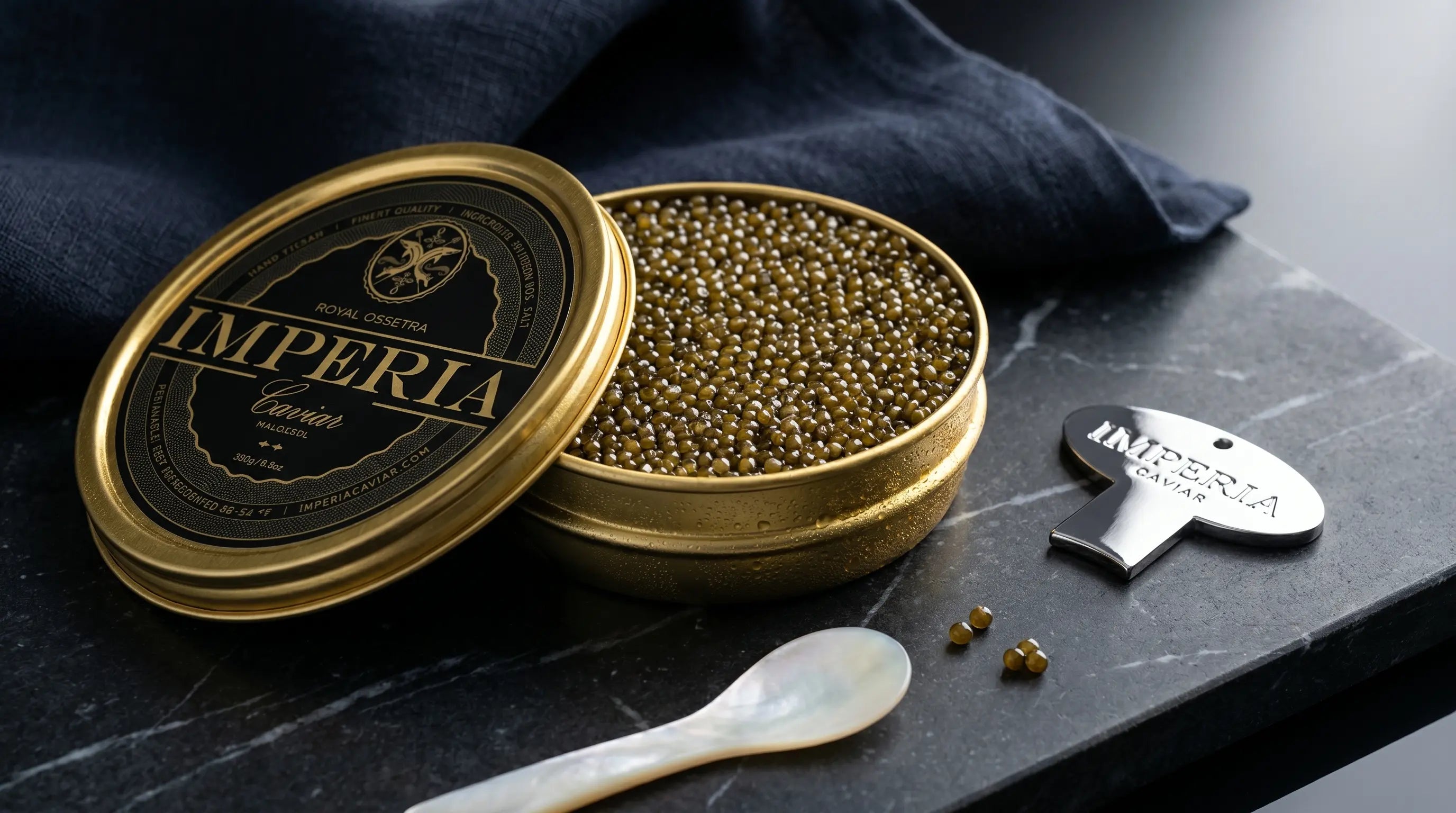
Caviar key (tin opener): A small metal tool with a flat, tapered end designed for this exact task. The edge slides between the lid and base with minimal effort. Many caviar brands, including Imperia Caviar, include one with your order.
-
Butter knife: The flat edge provides solid leverage. This is the most common household alternative.
-
Coin: A quarter or similar-sized coin wedges easily between the lip and the lid. Surprisingly effective in a pinch.
-
Back of a spoon: Sturdy enough to pry the seal. Less precise than a knife, but it gets the job done.
-
Church-key bottle opener: The pointed end fits neatly into the gap between the lid and the base.
Avoid sharp chef’s knives, scissors, or any tool that could slip. These risk puncturing the roe or cutting your fingers.
If you need a tin opener, check out Imperia Caviar’s caviar accessories, which include everything you need to open and serve properly.
Caviar Container Types and How to Open Each One
Not all caviar containers open the same way. The method depends on which of these three types you have.
|
Container Type |
What It Looks Like |
Tool Needed |
Quick Method |
|
Small Vacuum-Sealed Tin |
Round metal tin with press-fit lid |
Caviar key or butter knife |
Insert tool under lid rim, twist to break seal, lift |
|
Slip Tin / OT (Original Tin) |
Larger tin with rubber band around the seam |
Butter knife and hands |
Remove band, tap lid to release vacuum, pull apart slowly |
|
Glass Jar |
Glass jar with metal screw-on lid |
Hands (warm cloth if stuck) |
Twist counterclockwise; wrap warm cloth around the metal lid if tight |
The sections below walk through each method in detail.
How to Open a Vacuum-Sealed Caviar Tin (Step-by-Step)
To open a vacuum-sealed caviar tin, insert a caviar key or butter knife between the lid and the base. Gently twist to break the vacuum seal. You will hear a soft pop when it releases. Slide the tool around the rim and lift the lid straight off. The whole process takes under 30 seconds.
Here are the detailed steps:
-
Hold the tin firmly on a flat surface with your non-dominant hand.
-
Insert the flat edge of your caviar key or butter knife between the lid and the base, right where the two pieces meet.
-
Twist the tool gently to pry the lid upward. Apply steady, moderate pressure until you hear the vacuum seal pop.
-
Slide the tool around the circumference if needed, then lift the lid straight up.
If the seal does not break on the first attempt, reposition the tool slightly and try again. Two or three tries is normal for a tight seal.
Method 1: Using a Caviar Key
The caviar key is purpose-built for this task. Place the small, tapered end horizontally between the lid and the side of the tin. Twist upward. The key’s shape creates a lever effect that does most of the work.
Caviar keys also add a touch of ceremony at dinner parties. They signal to guests that you know your way around a tin.
Method 2: Using a Butter Knife or Coin (Without a Key)
No caviar key? A butter knife works nearly as well.
Place the tin upside down on a flat surface. Press the knife edge into the gap between the lid and the base at a slight angle. Apply gentle upward pressure to separate the two pieces. Flip the tin right-side up to finish opening.
The coin method follows the same principle. Wedge a coin between the lip and the lid, apply horizontal pressure for a few seconds, and the seal pops. Avoid sharp knives, as they can slip and damage the caviar or cut your fingers.
How to Open a Slip Tin (Larger Tins with Rubber Bands)
Slip tins require more patience than standard vacuum-sealed tins. These larger containers consist of two halves that slide together, sealed with a rubber band. They are common for restaurant supply and bulk orders.
Here is the step-by-step process:
Step 1: Remove the rubber band with your fingers or a knife.
Step 2: Tap the lid gently with a butter knife or metal tool. This begins releasing the internal vacuum, creating a small gap between the lid and the base.
Step 3: Grip both halves firmly. Gloves or a towel help with traction. Pull apart slowly.
Step 4: If the lid resists, tap again to release more air. Repeat the tap-and-pull cycle until the halves separate.
Patience matters here. Rushing risks compressing the roe inside. Take your time, and the tin will open cleanly.
Every Imperia Caviar shipment includes guidance on opening your specific container type. Browse our full collection to find your next tin!
How to Open a Caviar Glass Jar
Glass jars are the simplest to open. Many premium caviar brands ship in glass jars with screw-on metal lids.
Grip the jar body with one hand and twist the lid counterclockwise with the other. That is usually all it takes.
If the seal is tight, wrap a warm, damp cloth around the metal lid for about 30 seconds. The slight warmth causes the metal to expand, loosening its grip on the glass threading. Then twist again. This technique only heats the lid, not the caviar inside.
Do not submerge the jar in hot water or hold it under a running faucet. Direct heat transfer to the glass can warm the caviar, which degrades its texture and flavor. A cloth on the lid is the safe limit.
Why Are Caviar Tins So Hard to Open?
Caviar tins are sealed tight on purpose. Three factors explain why.
Freshness. Vacuum-sealed tins block air exposure entirely. Caviar is at its freshest shortly after curing and packaging. Malossol varieties (less than 5% salt) are especially perishable because the lower salt content provides less preservation. The airtight seal keeps the product in peak condition from producer to table.
Quality protection. Caviar is delicate and expensive. Producing it takes years of sturgeon aquaculture, careful harvesting, and precise curing. The tin protects the roe from contamination, light, and physical damage during transit.
Tradition. The caviar tin format dates back centuries. Opening it is part of the ritual, a signal that something special is about to begin. A tricky tin is not a design flaw. It is a mark of quality.
Common Mistakes When Opening Caviar Tins
These five errors are the most common causes of a messy or disappointing experience.
Using too much force. Aggressive prying causes the caviar to spill or crushes the delicate roe. Steady, moderate pressure is all you need.
Using sharp knives or scissors. These can slip, puncture the roe, or introduce metallic flavors. Stick with a butter knife or caviar key.
Applying heat to the tin. Some guides recommend dipping the tin in warm water. This is bad advice. Even brief warming can soften the caviar and accelerate spoilage. For glass jars, a warm cloth on the metal lid is acceptable because it only heats the lid, not the contents. For metal tins, skip the heat entirely.
Opening the tin too early. Caviar loses freshness rapidly once the seal breaks. Only open the tin when you are ready to serve.
Ignoring the container type. Vacuum-sealed tins and slip tins open differently. Using the wrong technique wastes time and risks damaging the product. Identify your container type first, then match the method.
What to Do After Opening Your Caviar Tin
Once the seal is broken, the clock starts on freshness. How you serve and store the caviar matters just as much as how you opened it.
How to Serve Caviar
Place the open tin inside a bowl of crushed ice to keep it chilled throughout the meal. Use mother of pearl, bone, or stainless steel spoons. Avoid silver, which reacts with the sulfur-rich proteins in caviar and creates a sharp, metallic taste. Stainless steel does not have this problem.
Take a small amount on the spoon. Let the caviar rest on your tongue rather than chewing. This releases the full spectrum of flavor.
Pair with blini, creme fraiche, or toast points, or enjoy it straight for the purest experience.
How to Store Opened Caviar
If you have leftover caviar, press plastic wrap directly onto the surface of the roe to minimize air contact. Close the lid and secure it with a rubber band.
Store the tin in the coldest spot in your fridge. The back of the bottom shelf is usually the best location.
The ideal temperature range is 28 to 32 degrees Fahrenheit (about minus 2 to 0 degrees Celsius). Never freeze opened caviar. Freezing destroys the texture of the eggs.
How Long Does Caviar Last After Opening?
Opened caviar stays at its best for about 48 hours when properly sealed and refrigerated. After that window, flavor and texture decline noticeably.
With a tight seal and correct fridge temperature, opened caviar remains safe to eat for up to two to three days.
The key factors are how well you re-sealed the tin, your fridge temperature, and how much air reached the roe during serving.
Open Your Next Tin with Confidence
Opening a caviar tin is a 30-second skill that becomes second nature after one or two tries. Break the seal gently, use the right tool, and match the method to your container type.
That tricky seal is not a flaw. It is a mark of quality, protecting a premium product from producer to plate.
Ready to put your skills to the test? Explore Imperia Caviar’s collection of premium Osetra, Kaluga, and more at. Every order ships with everything you need to open and enjoy!


