


How to Eat Caviar (A Complete Guide)
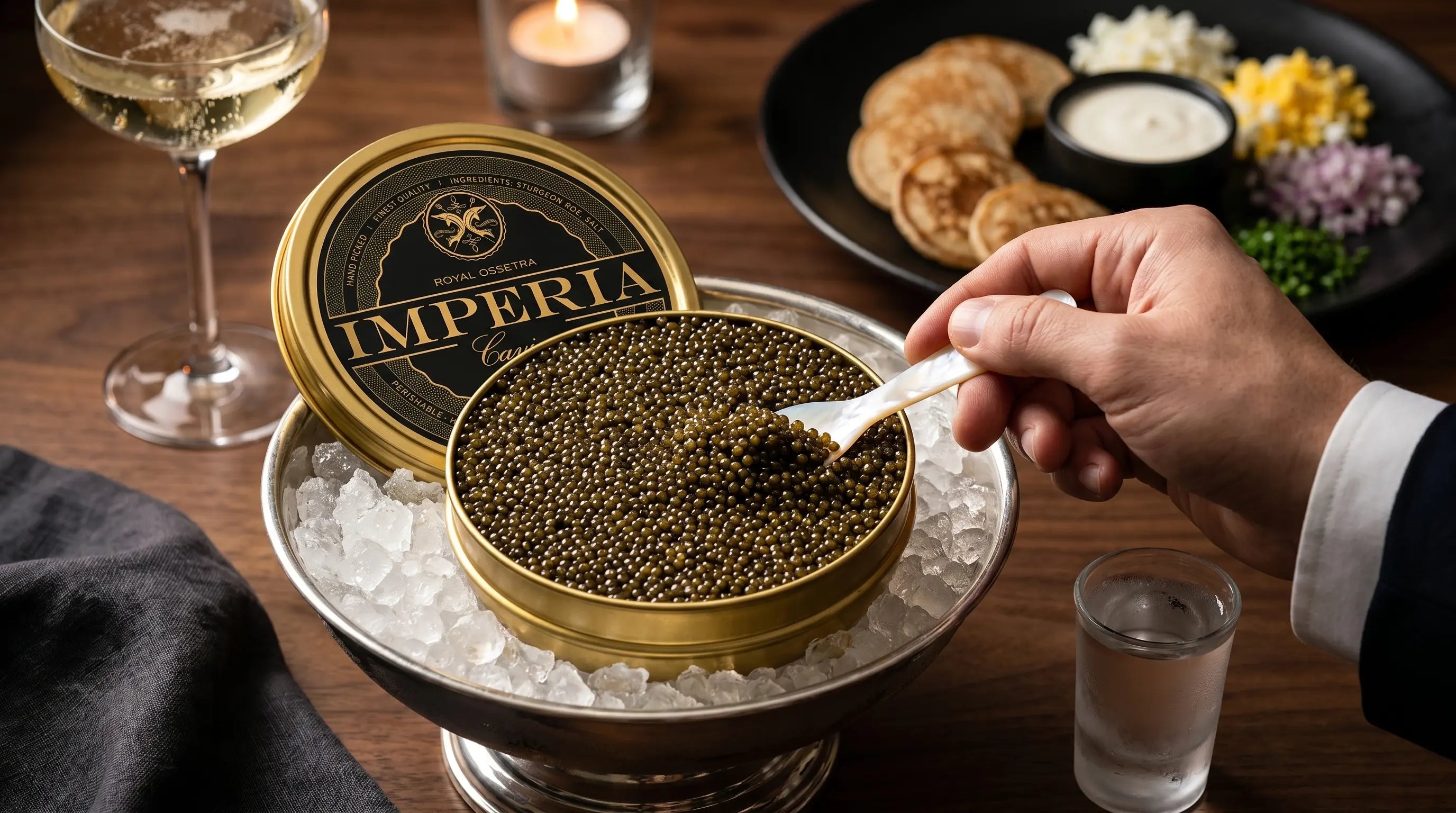
Quick Answer: Place a small amount on a mother of pearl spoon, rest it on your tongue, and press gently until the eggs pop. Never use metal spoons, serve the tin chilled on crushed ice, and always taste caviar pure before adding accompaniments.
Key Takeaways:
-
Never use metal spoons. Mother of pearl, bone, or horn prevents metallic off-flavours from contaminating the roe.
-
Serve chilled at 0°C (32°F). Place the open tin on crushed ice and keep it covered when not serving.
-
Taste it pure first. Take your first bite without accompaniments to appreciate the unmasked flavour profile.
-
Plan 30 to 50 grams per person for a starter. A 125g tin comfortably serves three to four guests.
-
Osetra is the best starting point. Imperia Caviar’s Osetra balances buttery richness with a nutty finish that suits first-time tasters and connoisseurs alike.
You have a tin of caviar in the fridge, a special evening ahead, and one question: how do you actually eat this properly? The rituals can seem intimidating. But the fundamentals are simple.
This article covers the full process: opening the tin, choosing utensils, mastering the tasting technique, and pairing with food and drink.
Let’s get started!
How to Eat Caviar Step by Step
Four steps separate a forgettable first bite from one you remember. Follow them in order. Each one builds on the last.
Step 1: Open the Tin Correctly
Most caviar comes in a vacuum-sealed tin with a rubber band holding the lid. Remove the band, then run a blunt knife or caviar key along the inner rim of the lid. Pry gently. Forcing it can crush the eggs closest to the edge and waste product.
The tin should have been in the fridge until five to ten minutes before serving. If you opened it early, place it on a bed of crushed ice in a small bowl. This keeps the temperature stable while you serve. Air and warmth are the two things that degrade caviar fastest, so keep the tin covered between servings.
One detail most guides skip: check the colour and smell before serving.
Fresh caviar has a clean, faintly oceanic scent. Individual eggs should be glossy, intact, and separate easily. If the eggs look dull, clumped, or smell strongly of fish, the product may have been stored improperly.
Step 2: Choose the Right Utensils
Utensils matter more than most people expect when learning how to eat caviar properly. Metal spoons react with the roe. The omega-3 fatty acids in caviar oxidise on contact with reactive metals, producing off-flavours and a faint metallic taste.
Silver is especially problematic because it also reacts with the natural sulphur compounds in the eggs. Stainless steel and gold-plated utensils with exposed base metal cause similar issues.
Mother of pearl is the standard. The shell material is chemically inert, adds no flavour, and has been the traditional choice in European caviar service for over a century. Bone, horn, ceramic, and glass spoons also work. If you have none of these, a clean plastic spoon is a neutral alternative.
Mother of pearl spoons are affordable and last for years with gentle hand washing. They are a small investment that makes a real difference to the tasting experience.
Browse Imperia Caviar’s mother of pearl spoons and serving accessories!
Step 3: Taste It Pure First
Before adding blinis, crème fraîche, or anything else, take your first bite of caviar on its own. This is the only way to judge quality and appreciate the unmasked flavour.
Two methods work well. The first is the spoon: scoop about half a teaspoon onto a mother of pearl spoon and place it directly on your tongue. Simple and clean.
The second is the "à la royale" method, named after Russian tsars who tasted caviar this way. Place a small mound on the back of your hand, between thumb and index finger. Clean skin adds no flavour, so you experience the roe in its purest form.
This technique doubles as a quality test. After tasting, smell the spot where the caviar rested. Quality roe leaves almost no fishy scent.
Step 4: Let It Pop. Do Not Chew.
This is the single most important technique. Place the caviar on your tongue and roll the eggs gently. Press them against the roof of your mouth. The thin membranes will burst, releasing a wave of buttery, briny flavour that coats your palate.
Chewing bypasses this entirely. Your molars crush the eggs too quickly, and the flavour never reaches the receptors on your tongue in the right sequence. The experience becomes flat instead of layered.
Pay attention to what you taste. Good caviar delivers brininess first, then a buttery richness, followed by a clean nutty or oceanic finish. If the dominant flavour is strong fishiness, that signals low quality or poor storage, not a normal characteristic.
Take your time with each bite. Fifteen to twenty seconds of focus per spoonful is normal. Caviar is not a food you rush through. The slow release of flavour is the entire point.
What to Eat with Caviar
Once you have tasted the caviar pure, accompaniments can enhance the experience. Knowing how to eat caviar with the right pairings elevates both the roe and the food it accompanies. The rule is simple: pair with neutral or mild flavours that complement without competing.
Blinis with crème fraîche. This is the classic European pairing. Warm buckwheat blinis provide a soft, slightly yeasty base. A small dollop of crème fraîche adds tang and creaminess. Top with a teaspoon of caviar. Three components, perfectly balanced.
Toast points or buttered bread. Lightly toast thin slices of white bread or brioche. Spread a thin layer of unsalted butter. Add the caviar on top. The butter adds richness without masking the roe. In Russia, a thick layer of butter on dark rye bread with caviar is a weekend morning staple.
Boiled potatoes. A tradition from Russian and Scandinavian tables. Small new potatoes, boiled in salted water, cooled slightly, then topped with a spoonful of caviar and a dot of sour cream. The starchy, mild potato is an ideal canvas.
Eggs. Hard-boiled eggs, halved, with the yolk mixed with a touch of crème fraîche, then topped with caviar. Or simply scrambled eggs finished with a generous spoonful of roe on top.
Garnishes to have on hand: finely chopped red onion, separated hard-boiled egg whites and grated yolks, fresh dill, chives. Use them sparingly. Avoid anything with strong flavours: garlic, heavily spiced crackers, strong cheeses. These will overpower the caviar.
A common question when learning how to eat caviar with accompaniments is how much roe to place on each piece. A small teaspoon per blini or toast point is the right ratio.
You want enough to taste the caviar distinctly, not so much that it slides off the base. Build each bite: base, a thin spread, then caviar on top. Eat it in one go.
What to Drink with Caviar
The right drink amplifies caviar. The wrong one overwhelms it. Three pairings have stood the test of time across European tables.
- Champagne. Dry Brut or Blanc de Blancs is the standard in France. The crisp acidity and fine bubbles cut through the richness of the roe without competing for attention. Crémant d'Alsace or Prosecco work as more affordable alternatives. Stick with dry styles. Sweet sparkling wine clashes.
- Vodka. The Russian tradition. Serve it ice-cold, neat, in small glasses. A sip of clean vodka between bites resets the palate completely. Avoid flavoured vodkas. The point is neutrality.
- Dry white wine. Chablis, Muscadet, Sancerre, or Sauvignon Blanc. Mineral-driven, unoaked whites with bright acidity pair well. Bold, oaky Chardonnays do not.
For a non-alcoholic option, sparkling mineral water works well. The carbonation and mineral bite cleanse the palate between bites in a similar way to champagne. Still water is fine for hydration, but sparkling adds a more engaging contrast to the richness of the roe.
What to avoid: sweet wines, tannic reds, citrus-heavy cocktails, and beer. Each of these competes with or overwhelms the subtle flavours of the roe.
Temperature matters for the drink too. Champagne should be served at 8 to 10°C, vodka straight from the freezer, and white wine well chilled. Warm beverages dull the palate and make it harder to appreciate the roe’s nuances.
If you want to know how to eat caviar like a local in Paris or Moscow, start with the drink pairing. It sets the tone for the entire experience.
How Much Caviar Per Person
The right amount depends on the occasion. Too little and guests barely taste it. Too much is an expensive miscalculation. Use this table as your guide.
|
Occasion |
Per Person |
Tin Size |
Serves |
|
First-time tasting |
10 to 15g |
30g tin |
2 to 3 guests |
|
Cocktail party canapés |
15 to 20g |
50g tin |
3 to 4 guests |
|
Appetiser or starter |
30 to 50g |
125g tin |
3 to 4 guests |
|
Dinner centrepiece |
50 to 75g |
250g tin |
4 to 5 guests |
|
Celebration or lavish |
100g+ |
250g+ tin |
2 to 3 guests |
A practical example: for a dinner party of six with caviar as a starter, plan for 180 to 300 grams total. That is two standard 125g tins or one 250g tin plus a 50g tin.
Portion planning is one of the most practical parts of understanding how to eat caviar at home. Buying too little leaves guests wanting more.
Buying too much risks waste, since opened caviar should be consumed within 48 hours. When in doubt, round up to the next tin size. Leftover sealed tins keep well in the fridge for weeks.
If you are hosting for the first time, buy a small 30g tin for yourself a few days before the event. Use it to practise opening, serving, and tasting. This removes any uncertainty on the night itself and lets you focus on your guests instead of the technique.
Imperia Caviar offers tins from 30g to 250g. Find the right size for your occasion!
Caviar Types at a Glance
Not all caviar tastes the same. The species of sturgeon, the farming conditions, and the curing process all shape the flavour. This table covers the varieties you are most likely to encounter.
|
Variety |
Egg Size |
Colour |
Flavour |
Texture |
Price |
Best For |
|
Beluga |
Large |
Light to dark grey |
Creamy, buttery, subtle |
Soft, melting |
€€€€ |
Connoisseurs |
|
Osetra |
Medium |
Golden to brown |
Nutty, briny, complex |
Firm pop |
€€€ |
Best all-rounder |
|
Sevruga |
Small |
Dark grey to black |
Intense, briny, bold |
Firm, crisp |
€€ |
Bold flavour seekers |
|
Siberian Sturgeon |
Medium |
Dark brown to black |
Earthy, mild brine |
Medium firm |
€€ |
Everyday luxury |
|
Salmon Roe |
Very large |
Bright orange |
Buttery, mild, clean |
Juicy burst |
€ |
Beginners, sushi |
If this is your first time, start with Osetra. It has the widest appeal: a nutty depth that rewards attention without overwhelming a new palate. Imperia Caviar’s Osetra is farmed sustainably and aged for a clean, complex finish.
Note that salmon roe, while often sold alongside caviar, is technically not caviar. True caviar comes exclusively from sturgeon. Salmon roe is a separate product with a different texture and flavour profile. It is excellent on sushi and in Japanese cuisine, but it follows different rules for serving and pairing.
Once you know how to eat caviar and have tried two or three varieties, you will develop a clear preference. Some people gravitate toward the bold brininess of Sevruga. Others prefer the creamy subtlety of Beluga. There is no wrong answer. The table above gives you a starting map.
Explore Imperia Caviar’s full range of caviar!
Caviar Etiquette at a Restaurant
Fine dining restaurants in Paris, London, and across Europe have unwritten rules around caviar service. Knowing them keeps the experience smooth and shows respect for the tradition.
When caviar arrives as an hors d’oeuvre, take no more than two spoonfuls per round. It does not matter how much you enjoy it. Taking more is considered poor form at a shared table. The restaurant will provide non-metal spoons. If they do not, it is perfectly acceptable to ask for one.
Let the eggs sit on your tongue. Do not chew. Sip water or champagne between bites to reset your palate. Follow the restaurant’s lead on pairings and garnishes. If you are unsure about anything, ask the server or sommelier. They expect the question and are happy to guide you.
At Michelin-starred restaurants, caviar is often presented on a tiered stand with crushed ice, blinis, and accompaniments arranged separately. The intent is for you to taste the caviar alone first, then build combinations.
This mirrors the step-by-step approach outlined earlier in this guide. Knowing how to eat caviar at a restaurant is simply a more formal version of the same fundamentals.
One more point of etiquette: never stir the roe in the tin. The eggs are densely packed and fragile, and stirring crushes them. Scoop gently from the top with the serving spoon provided.
Common Mistakes When Eating Caviar
Even people who know how to eat caviar in theory still make these seven errors. Most are easy to avoid once you are aware of them.
-
Using a metal spoon. The metal reacts with the roe and creates off-flavours before it reaches your tongue.
-
Serving at room temperature. Warm caviar turns mushy and loses its pop. Keep it on ice.
-
Chewing the eggs. You lose the layered flavour release. Roll and press gently instead.
-
Drowning it in garnishes. Strong flavours like garlic or lemon overpower the roe. Use accompaniments sparingly.
-
Taking too much at a dinner party. Two spoonfuls is the polite maximum when sharing.
-
Leaving the opened tin unsealed. Press cling film onto the surface, seal, and refrigerate. Consume within 48 hours.
-
Freezing caviar. Ice crystals rupture the egg membranes, destroying the texture completely.
Most of these mistakes come down to impatience or unfamiliarity. Once you know how to eat caviar the right way, they become easy to spot and avoid.
Conclusion
Now you know how to eat caviar the right way. It comes down to a few fundamentals: a non-metal spoon, a chilled tin, a patient tongue. Taste it pure first, let the eggs pop against your palate, then build from there with simple accompaniments and a glass of dry champagne or cold vodka.
Start with a tin of Osetra if this is your first time. It is the most versatile variety: complex enough to reward attention, approachable enough to enjoy without a guidebook in hand. From there, work through the comparison table above and find the profile that suits your palate.
The best way to learn how to eat caviar is simply to eat more of it. Each tin teaches you something new about flavour, texture, and your own preferences. Keep the fundamentals in place and the experience improves every time.
Ready to taste? Explore Imperia Caviar’s collection!


